
The demand for online learning has grown exponentially over the past few years. People, students, and hobbyists are looking for easy ways to learn skills and knowledge at home. This presents a lucrative opportunity for anyone with expertise to create an online course and monetize their knowledge.
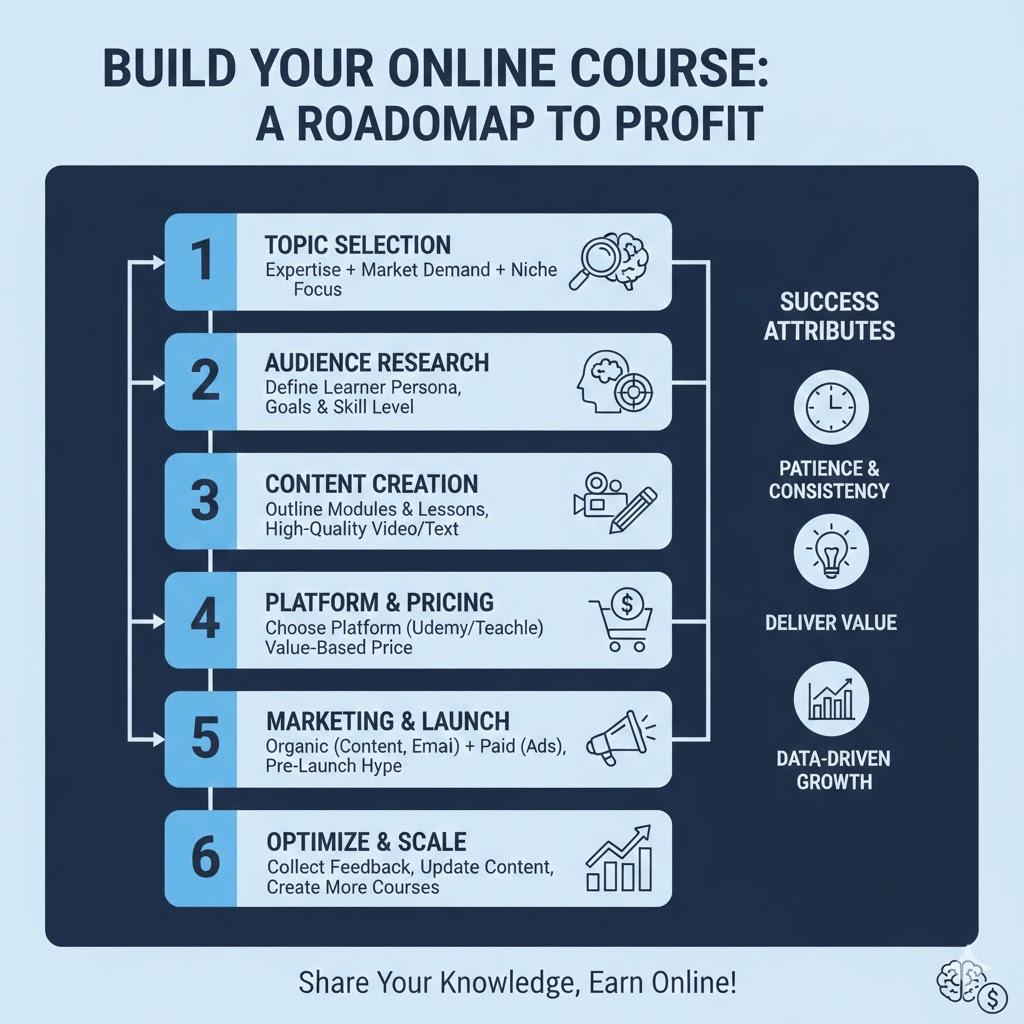
Creating a successful online course requires more than simply recording lectures. You need to know your audience. Create high-quality content. Pick the right platform. Market your course well. Keep improving for better engagement and sales. This guide provides a comprehensive roadmap for beginners and aspiring online educators to build profitable courses from scratch.
Read Also: General Principles of Goat Production
Understanding the Online Course Landscape
Before diving into course creation, it’s important to understand the online learning environment. Platforms such as Udemy, Teachable, Skillshare, and Coursera have made it easier for educators to reach global audiences.
Online learners typically seek courses that:
- Solve a specific problem or skill gap
- Offer practical, actionable knowledge
- Are structured clearly with engaging content
- Include resources and opportunities for practice
The global e-learning market continues to expand, meaning there’s room for both niche courses and broader topics.
Step 1: Identifying Your Course Topic
The first step is choosing the right topic. Your course should reflect your expertise and meet a real demand.
1. How to Find a Profitable Topic
- Leverage Your Expertise – Consider skills you are confident teaching.
- Research Market Demand – Use tools like Google Trends, Udemy search, and keyword research to see what learners are searching for.
- Analyze Competition – Study similar courses to identify gaps or opportunities for improvement.
- Validate With Potential Learners – Engage your audience through surveys or social media to understand their needs.
2. Niche Selection Tips
- A narrow niche often converts better than a broad one. For example, “Excel for Data Analysts” performs better than simply “Excel.”
- Avoid topics that are too general or overly saturated unless you can offer a unique angle.
Step 2: Defining Your Audience
Understanding who will take your course is crucial for design, content, and marketing.
- Skill level (beginner, intermediate, advanced)
- Professional background or personal interests
- Goals they want to achieve
- Learning preferences (video, text, interactive exercises)
Creating a learner persona helps guide the course structure, tone, and examples you use.
Step 3: Structuring Your Course
A clear structure is essential for keeping learners engaged and improving completion rates.
1. Components of an Effective Course
- Introduction – Set expectations and explain the outcomes.
- Modules or Sections – Break content into manageable topics.
- Lessons – Each lesson should focus on a single concept or skill.
- Practical Exercises – Include quizzes, assignments, or projects to reinforce learning.
- Summary and Action Plan – Recap key points and provide actionable next steps.
2. Tips for Course Flow
- Start simple and progressively increase complexity.
- Use real-life examples to demonstrate concepts.
- Mix formats (video, text, audio, downloads) to cater to different learning styles.
Step 4: Creating High-Quality Content
The quality of your content directly affects learner satisfaction and course reputation.
1. Video Production
- Use a good microphone and camera for clear audio and visuals.
- Keep videos concise (5–15 minutes) to maintain attention.
- Include visuals, slides, or on-screen demonstrations.
2. Written Content
- Provide clear, well-organized notes or summaries.
- Use headings, bullet points, and visuals for readability.
- Include downloadable resources like templates or worksheets.
3. Interactive Elements
- Quizzes and assignments reinforce learning and improve retention.
- Discussion forums or group access can increase engagement and perceived value.
Step 5: Choosing the Right Platform
Selecting a platform depends on your goals, technical skill, and marketing strategy.
- Udemy – Large audience but high revenue sharing and strict guidelines.
- Teachable – Greater control over pricing and branding; requires more marketing effort.
- Skillshare – Subscription-based; earnings depend on student engagement.
- Kajabi – Premium platform for creators who want full control over courses, marketing, and memberships.
Consider whether you want an existing audience (marketplaces like Udemy) or full control (self-hosted platforms).
Step 6: Pricing Your Course
Pricing affects both perceived value and conversion rates.
- Research Similar Courses – See what competitors charge for comparable content.
- Value-Based Pricing – Price according to the transformation your course delivers, not just hours of content.
- Tiered Pricing – Offer different levels, e.g., basic course, premium with coaching or additional resources.
Offering a launch discount or limited-time promotion can attract initial students and generate reviews.
Step 7: Marketing Your Online Course
Even the best course won’t sell without effective marketing.
1. Organic Marketing
- Content Marketing – Blog posts, YouTube videos, and social media can attract learners.
- Email Marketing – Build a list and send updates, previews, or free tips to nurture interest.
- Partnerships – Collaborate with influencers or related blogs to expand reach.
2. Paid Marketing
- Facebook or Instagram Ads – Target specific interests and demographics.
- Google Ads – Capture learners actively searching for courses in your niche.
- Retargeting – Re-engage website visitors who didn’t purchase initially.
Tracking campaigns and adjusting based on ROI ensures marketing budgets are used efficiently.
Step 8: Launching Your Course
A successful launch creates momentum and social proof.
1. Pre-Launch Checklist
- Test all course content for technical issues.
- Collect testimonials from beta testers or early users.
- Create a marketing plan for launch week.
2. Launch Week Tips
- Offer early-bird pricing to incentivize first buyers.
- Engage actively on social media and email channels.
- Encourage reviews and ratings to build credibility.
Step 9: Post-Launch Optimization
After launch, continuous improvement ensures long-term success.
- Collect feedback to identify gaps or unclear lessons.
- Update content regularly to maintain relevance.
- Introduce upsells or new modules to increase revenue.
- Monitor student engagement and completion rates for insights on improving structure.
Scaling Your Course for More Income
Once your first course is successful, consider ways to scale:
- Create advanced or complementary courses.
- Bundle courses together for premium pricing.
- Offer coaching, consulting, or live webinars as add-ons.
- Expand marketing efforts to new channels and audiences.
Scaling requires investment in time, marketing, and sometimes outsourcing tasks like editing or content creation.
Key Steps to a Profitable Online Course
| Step | Focus | Key Action |
|---|---|---|
| Topic Selection | Identify demand | Choose a niche with market need |
| Audience Research | Understand learners | Create learner persona |
| Course Structure | Organize content | Modules, lessons, exercises |
| Content Creation | Deliver value | High-quality video, text, resources |
| Platform Choice | Distribution | Select marketplace or self-host |
| Pricing | Monetization | Research and apply value-based pricing |
| Marketing | Traffic & conversions | Organic + paid strategies |
| Launch | First sales | Pre-launch promotion + launch offers |
| Optimization | Continuous growth | Update content & track engagement |
Frequently Asked Questions
1. How long does it take to create an online course?
It varies depending on the complexity of content and production quality. Beginners can spend 4–8 weeks creating a comprehensive course, while advanced courses with multiple modules may take several months.
2. Can I make money from just one course?
Yes, but revenue is limited by traffic and demand. Most successful educators create multiple courses or additional offerings to increase income.
3. Do I need professional equipment to start?
No. Beginners can start with a good smartphone camera, microphone, and free or affordable editing software. Quality matters, but content clarity is more important than high-end production.
4. How do I attract my first students?
Leverage your existing audience, use social media, create helpful content leading to your course, and consider offering early-bird discounts to encourage initial enrollments.
5. Is ongoing support necessary for students?
While not always required, offering support through discussion forums, email, or live Q&A sessions improves course completion rates and satisfaction, which leads to better reviews and referrals.
Creating a successful online course is both a business and a teaching endeavor. It requires careful planning, quality content, audience understanding, and consistent marketing. While the process demands effort, the reward is significant: a scalable income stream, the ability to reach a global audience, and the satisfaction of helping others learn valuable skills.
By following the steps in this guide, beginners can go from idea to launch and eventually build multiple courses that generate consistent revenue while establishing themselves as authorities in their niche.
Do you have any questions, suggestions, or contributions? If so, please feel free to use the comment box below to share your thoughts. We also encourage you to kindly share this information with others who might benefit from it. Since we can’t reach everyone at once, we truly appreciate your help in spreading the word. Thank you very much for your support and for sharing!
Read Also: DIY – Tips for Becoming a Dreamcatcher Pro