Starting an online business no longer requires owning a warehouse, stocking products, or investing huge capital upfront. Dropshipping is a great business model for beginners. It lets anyone sell products online without needing to manage inventory or shipping. Because of its low startup cost and global reach, dropshipping continues to attract students, beginners, and aspiring entrepreneurs.
This beginner guide explains how to start a dropshipping business step by step. It explains how dropshipping works. It also tells you what you need to succeed. You will learn about common mistakes to avoid. Finally, it shows you how to build a lasting business instead of just a short-term experiment. Everything is explained clearly, professionally, and practically.
What Is Dropshipping and How Does It Work?
Dropshipping is an e-commerce business model where you sell products without keeping them in stock. Instead of buying products in bulk, you partner with a supplier who ships the product directly to your customer after a sale is made.
Here is how the process works in simple terms:
- You create an online store and list products.
- A customer places an order and pays you.
- You forward the order to your supplier.
- The supplier ships the product directly to the customer.
- You keep the difference between the selling price and the supplier cost as profit.
Your main responsibility is marketing, customer experience, and store management, not logistics.
Why Dropshipping Is Suitable for Beginners
Dropshipping is attractive because it reduces many risks associated with traditional businesses. You do not need to worry about unsold inventory, storage costs, or shipping operations.
Some key advantages include:
- Low startup capital
- No inventory management
- Ability to test products easily
- Location independence
- Scalability with minimal overhead
However, dropshipping is not “easy money.” Success depends on strategy, patience, and consistent improvement.
Understanding the Real Costs of Dropshipping
While dropshipping is low-cost, it is not free. Understanding the basic expenses helps you plan realistically.
Typical costs include:
- Domain name and hosting
- E-commerce platform subscription
- Marketing and advertising budget
- Optional design or app tools
Most beginners can start with a relatively small budget compared to physical businesses.
Read Also: DIY: Tips for Becoming a Dreamcatcher Pro
Step-by-Step Guide to Starting a Dropshipping Business
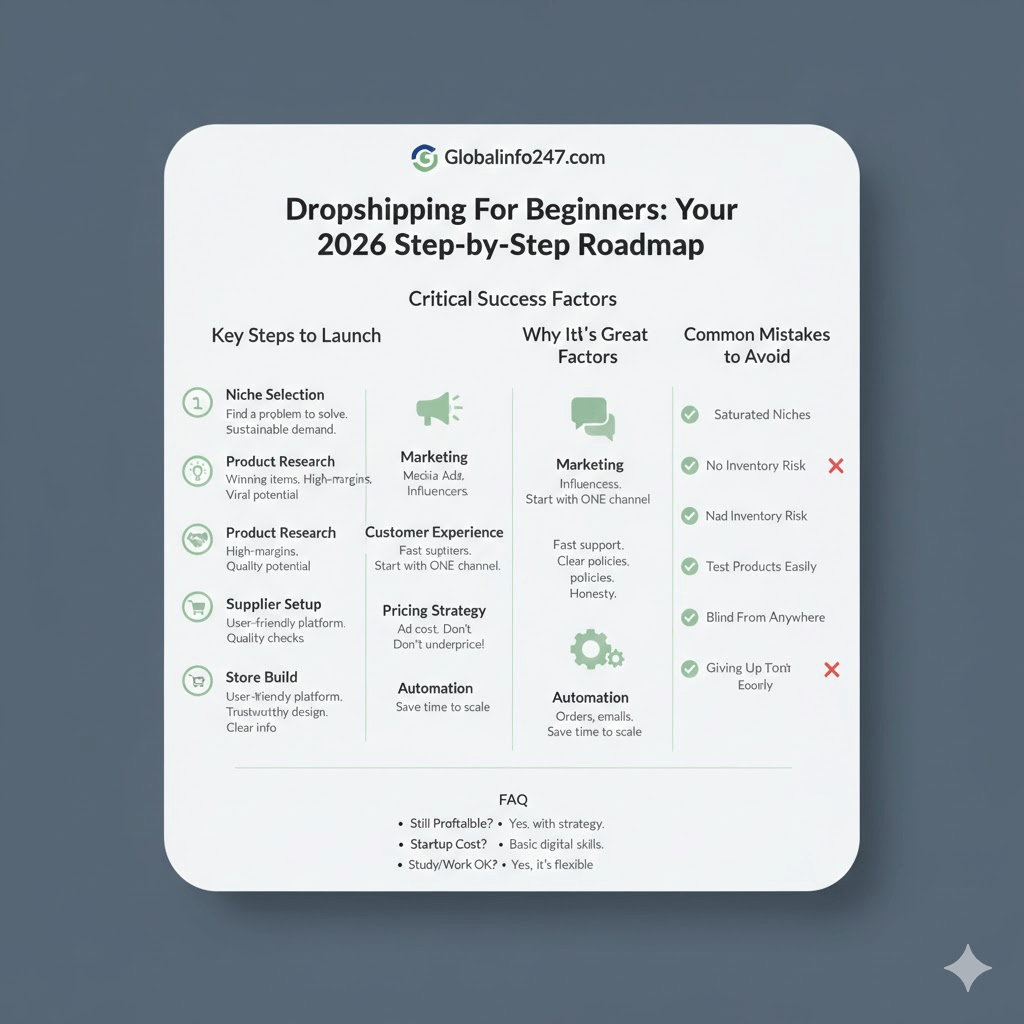
1. Choose a Profitable Niche
A niche is a specific market segment you focus on. Choosing the right niche is one of the most important decisions you will make.
A good niche should:
- Solve a real problem
- Have consistent demand
- Not be overly saturated
- Appeal to a specific audience
Instead of selling everything, focus on a narrow category. This makes branding and marketing much easier.
2. Research and Select Winning Products
Product research determines whether your store succeeds or fails. A good product should attract attention, solve a problem, and be reasonably priced.
When researching products, look for:
- Practical or emotional value
- Products people already buy online
- Items with clear use cases
- Products that allow room for profit
Avoid selling extremely cheap products with very low margins, as advertising costs can quickly erase profits.
3. Find Reliable Dropshipping Suppliers
Your supplier is a critical part of your business. Reliable suppliers ensure good product quality, reasonable shipping times, and responsive communication.
Suppliers can be found through dropshipping platforms, marketplaces, or direct manufacturer relationships. Before committing, test product quality and delivery time where possible.
A poor supplier can damage your brand even if your marketing is excellent.
4. Set Up Your Online Store
Your store is your digital storefront. It must look trustworthy, easy to navigate, and optimized for conversions.
Most beginners use user-friendly e-commerce platforms that allow drag-and-drop customization. Focus on:
- Clean design
- Clear product descriptions
- High-quality images
- Simple checkout process
You do not need a perfect store on day one. Functionality and clarity matter more than complex design.
5. Price Your Products Strategically
Pricing affects both sales volume and profit. Beginners often make the mistake of underpricing to attract customers.
When setting prices, consider:
- Supplier cost
- Shipping fees
- Platform fees
- Advertising expenses
- Desired profit margin
Your price should reflect value, not just competition. Customers pay for trust, convenience, and experience.
6. Set Up Payment and Order Processing
Your store must support secure payment methods that customers trust. This includes card payments and digital wallets depending on your target market.
Order processing should be smooth and automated where possible. Automation reduces errors and saves time as order volume grows.
Always test your checkout process before launching.
7. Launch and Market Your Store
Marketing is where most dropshipping businesses succeed or fail. Even the best product will not sell without visibility.
Popular beginner-friendly marketing methods include:
- Social media advertising
- Influencer promotions
- Content marketing
- Search engine optimization
Start with one marketing channel, learn it properly, and scale gradually.
Managing Customer Experience and Trust
Customer trust is essential in dropshipping. Since you do not control shipping directly, communication becomes very important.
Focus on:
- Clear shipping policies
- Honest delivery timelines
- Responsive customer support
- Transparent refund policies
Satisfied customers increase repeat purchases and positive reviews.
Common Beginner Mistakes to Avoid
Many beginners fail not because dropshipping does not work, but because of avoidable mistakes.
Common errors include:
- Choosing saturated niches without differentiation
- Using unreliable suppliers
- Ignoring customer service
- Spending heavily on ads without testing
- Expecting instant success
Treat dropshipping as a real business, not a shortcut.
Scaling Your Dropshipping Business
Once you find products that sell consistently, scaling becomes the next focus.
Scaling strategies include:
- Increasing ad budget gradually
- Improving website conversion rates
- Expanding product range within the same niche
- Building email and customer lists
- Strengthening brand identity
Long-term success comes from branding, not random product selling.
Dropshipping Business Overview
| Area | Beginner Focus | Why It Matters |
|---|---|---|
| Niche Selection | Problem-solving markets | Easier marketing |
| Product Research | Demand and margins | Profitability |
| Supplier Choice | Reliability | Customer satisfaction |
| Store Setup | Clarity and trust | Conversions |
| Marketing | One channel focus | Sustainable growth |
| Customer Support | Communication | Brand reputation |
Frequently Asked Questions (FAQ)
Is dropshipping still profitable for beginners?
Yes, dropshipping can be profitable when done correctly. Success depends on product selection, marketing strategy, and customer experience.
How much money do I need to start?
Many beginners start with a modest budget covering platform fees and basic marketing. Costs are lower compared to traditional businesses.
Do I need technical skills to start dropshipping?
No advanced technical skills are required. Most platforms are beginner-friendly and provide tutorials.
How long does it take to make the first sale?
Some stores make sales within days, others take weeks or months. Consistency and testing play a major role.
Can I do dropshipping while studying or working?
Yes. Dropshipping is flexible and can be managed alongside studies or a full-time job, especially when processes are automated.
Starting a dropshipping business is one of the most accessible ways to enter e-commerce as a beginner. While the barrier to entry is low, long-term success requires patience, learning, and professionalism.
Focus on solving real problems, building trust with customers, and improving gradually. Avoid shortcuts and unrealistic expectations. When approached as a serious business, dropshipping can grow from a small side project into a sustainable online income source.
Read Also: Types of Orchids: All You Need To Know About