
Blogging has evolved from a personal diary into a powerful platform for generating real income. A profitable blog can become a sustainable business, allowing you to earn in dollars from anywhere in the world. Creating a successful blog takes more than just writing posts. It needs careful planning, regular effort, and money-making strategies that fit your audience.
This guide gives you a clear plan to start a blog, increase traffic, and make money. It helps you earn a good income while establishing your authority in your niche.
Why Blogging Can Be Profitable
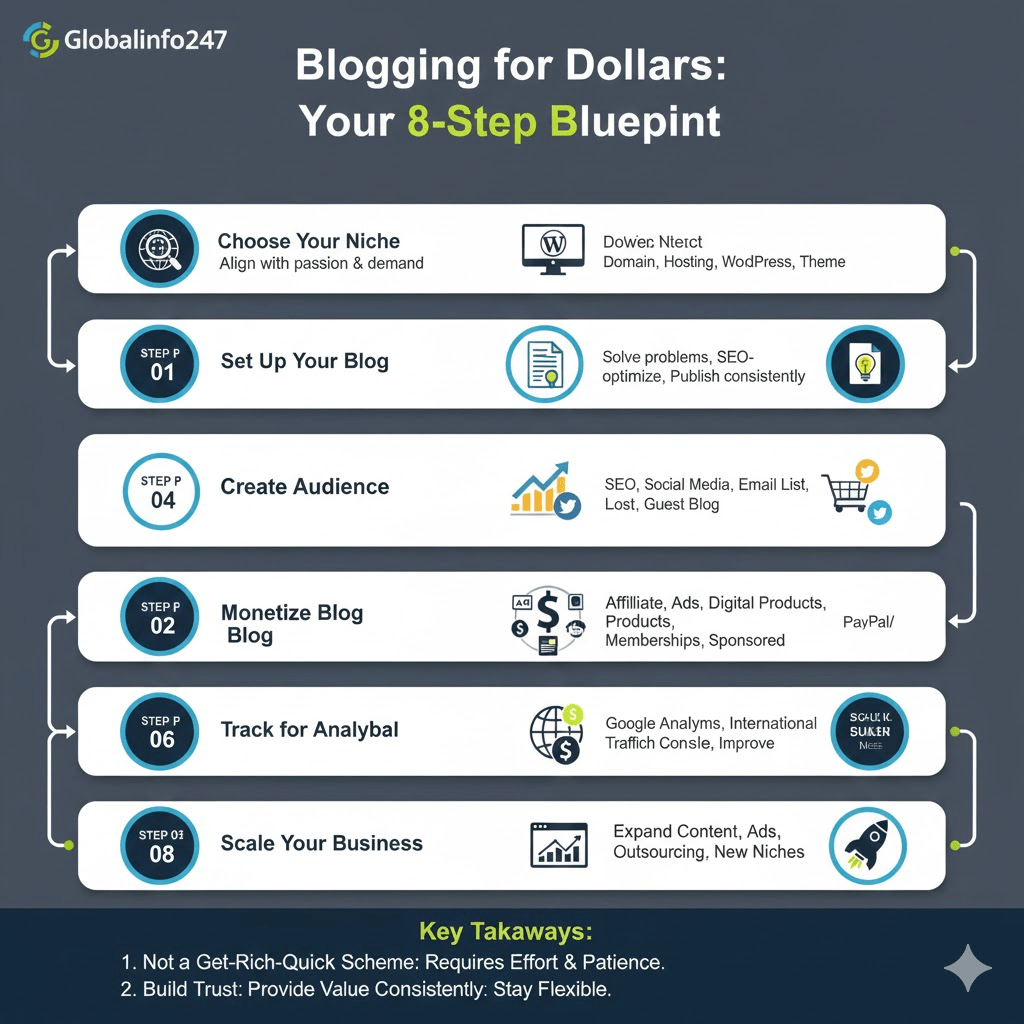
Blogging remains one of the most accessible ways to earn online. Unlike creating apps, launching physical products, or running service-based businesses, a blog requires minimal upfront investment. A domain name, hosting, and quality content are enough to start.
The profitability comes from diverse revenue streams. Blogs can earn money through advertising, affiliate marketing, selling digital products, sponsored content, and memberships. When done right, one blog can make thousands of dollars each month, especially if you have a global audience.
Step 1: Choose Your Niche
The first step to a profitable blog is choosing the right niche. Your niche determines your audience, content, and monetization methods. A successful niche should:
- Align with your knowledge and passion
- Have a demand for information or solutions
- Offer monetization potential through products or services
Popular profitable niches include personal finance, health and fitness, technology, travel, lifestyle, and digital marketing. Research demand and competition using tools like Google Trends, Ahrefs, and SEMrush to validate your idea.
Focusing on a niche helps you build authority and trust, which is crucial for attracting readers and earning revenue.
Step 2: Set Up Your Blog
Choose a Domain Name
Your domain should be memorable, short, and relevant to your niche. A strong domain enhances brand credibility and SEO potential.
Select Reliable Hosting
Fast, secure hosting ensures your blog runs smoothly. Providers like Bluehost, SiteGround, or Hostinger offer beginner-friendly plans with WordPress integration.
Install WordPress
WordPress is the most popular blogging platform, offering flexibility, plugins, and themes. It allows beginners to build professional blogs without extensive technical knowledge.
Choose a Theme
Select a clean, responsive theme. Your blog must look professional, load quickly, and be mobile-friendly. Avoid cluttered designs that distract from content.
Step 3: Create High-Quality Content
Content is the foundation of a profitable blog. It attracts visitors, builds trust, and encourages engagement. Effective content should:
- Solve specific problems or answer questions
- Be well-researched and original
- Use a clear structure with headings, paragraphs, and images
- Incorporate SEO best practices
Types of content that drive traffic and revenue include:
- How-to guides: Step-by-step instructions solving a problem
- Product reviews: Highlight features and benefits, naturally linking to affiliate products
- Listicles: “Top 10 tools for X” or “Best tips for Y”
- Case studies: Demonstrate real results for credibility
Consistency is key. Aim to publish high-quality content regularly to grow authority and attract search engine traffic.
Read Also: Economic Importance, Uses, and By-Products of Cocoa/Cacao Sepals
Step 4: Grow Your Audience
A blog cannot earn without readers. Focus on targeted traffic, people genuinely interested in your niche. Methods include:
SEO (Search Engine Optimization)
Optimize content for keywords your audience searches for. Use meta descriptions, title tags, internal links, and proper headings. SEO drives organic traffic, which is long-lasting and cost-effective.
Social Media
Platforms like Facebook, Instagram, TikTok, and Pinterest can amplify your content. Share posts, engage in communities, and create content aligned with your blog to attract followers.
Email Marketing
An email list lets you communicate directly with your audience. Offer lead magnets such as free eBooks, checklists, or templates to capture subscribers. A strong email list increases conversions for monetization strategies.
Guest Blogging
Write for established blogs in your niche. Guest posting exposes your brand to larger audiences and earns backlinks for SEO.
Step 5: Monetize Your Blog
Once traffic grows, focus on monetization. Profitable blogs typically use multiple income streams for stability.
1. Affiliate Marketing
Promote products or services and earn commissions on sales. Integrate links naturally into content, such as tutorials or reviews. Focus on products relevant to your audience for better conversion.
2. Display Advertising
Use networks like Google AdSense, Mediavine, or Ezoic to display ads. You earn money per click or impression. While income depends on traffic, ads provide passive revenue once set up.
3. Selling Digital Products
Digital products like eBooks, courses, or templates offer high-profit margins. Once created, they can be sold repeatedly with minimal cost. Focus on products that solve problems for your audience.
4. Sponsored Content
Brands pay to feature articles, videos, or reviews on your blog. Sponsored content works best once your blog has a loyal, engaged audience.
5. Memberships and Subscriptions
Offer premium content, tools, or exclusive communities for a recurring fee. Memberships provide predictable, recurring income, strengthening long-term sustainability.
6. Freelance Services
If your blog showcases expertise, offer services like consulting, coaching, or freelance writing. This can complement content monetization and strengthen authority.
Step 6: Optimize for International Earnings
To earn in dollars, consider:
- Using USD-based affiliate programs (Amazon, ClickBank, or digital product platforms)
- Targeting global audiences with English-language content
- Setting up PayPal or Stripe accounts for easy international payments
International traffic and monetization often yield higher earnings due to stronger purchasing power compared to local currencies.
Step 7: Track and Analyze Performance
Analytics are essential for growth. Tools like Google Analytics and Search Console help track:
- Traffic sources
- Visitor behavior
- Popular content
- Conversion rates
Use this data to optimize content, traffic strategies, and monetization methods. Focus on high-performing pages and refine underperforming ones.
Step 8: Scale Your Blog
Scaling a blog involves expanding reach, content, and monetization strategies:
- Publish more content regularly targeting new keywords
- Invest in advertising to boost high-converting posts
- Collaborate with influencers or other bloggers
- Outsource content creation to maintain consistency
- Expand into complementary niches to broaden audience
With scaling, a blog can evolve from a side project to a full-time, profitable business.
Steps to Start a Profitable Blog
| Step | Action | Key Considerations |
|---|---|---|
| 1 | Choose Niche | Align with passion, audience demand, monetization potential |
| 2 | Set Up Blog | Domain, hosting, WordPress, responsive theme |
| 3 | Create Content | Solve problems, SEO-optimized, consistent publishing |
| 4 | Grow Audience | SEO, social media, email marketing, guest blogging |
| 5 | Monetize Blog | Affiliate marketing, ads, digital products, memberships, sponsored posts |
| 6 | Optimize for Global Earnings | USD programs, international traffic, payment setup |
| 7 | Track & Analyze | Use analytics to improve content, traffic, and monetization |
| 8 | Scale | Expand content, partnerships, advertising, outsourcing |
Frequently Asked Questions (FAQ)
Q1: How long does it take to earn in dollars from a blog?
Beginners may see initial income within 3–6 months. Full monetization and significant earnings typically take 12–18 months of consistent effort.
Q2: Can I start a blog without technical skills?
Yes. WordPress is beginner-friendly, and hosting providers offer one-click installations. Themes and plugins simplify design, SEO, and monetization setup.
Q3: Do I need a large audience to earn?
Not necessarily. Targeted, engaged audiences convert better than large random traffic. Focus on quality over quantity in the early stages.
Q4: What are the best niches for earning in dollars?
Finance, technology, health, digital marketing, and lifestyle niches generally attract high-paying audiences and affiliate opportunities.
Q5: Can a blog generate passive income?
Yes. High-quality content, SEO, and affiliate links can generate ongoing revenue with minimal maintenance once established.
Starting a profitable blog and earning in dollars requires planning, consistency, and strategic monetization. Choose the right niche. Create valuable content. Grow a targeted audience. Use different ways to make money. This will help you build a lasting online business. Scaling your blog over time with quality content, global traffic strategies, and diversified monetization ensures long-term success.
Blogging is more than just writing—it’s a business model that rewards persistence, creativity, and smart execution. With hard work and focus, your blog can change from a hobby into a steady source of income.
Read Also: How to Make Money Online: 15 Proven Methods That Work Worldwide