Building a website is an achievement on its own but turning that website into a source of income is what many beginners truly aim for. Website monetization is the process of earning revenue from your online content, traffic, or services. For newcomers, this can feel overwhelming because of the many options available and the technical jargon surrounding them. The good news is that monetization does not require advanced technical skills or massive traffic at the beginning. With the right strategy, even a small website can generate steady income over time.
This guide explains website monetization from the ground up. It covers the most effective strategies for beginners, how they work, when to use them, and common mistakes to avoid. Whether you run a blog, niche website, or informational platform, this article will help you choose the right path based on your goals and audience.
What is Website Monetization
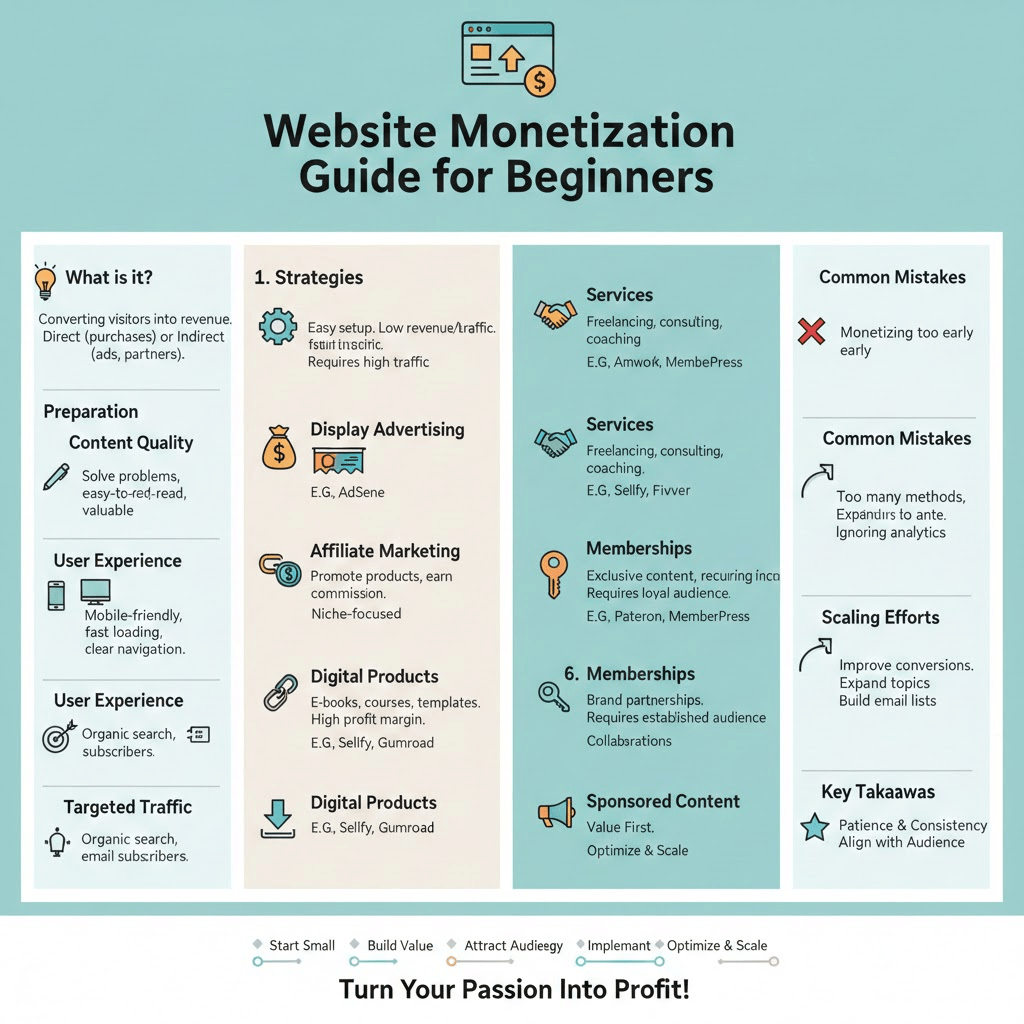
Website monetization simply means converting visitors into revenue. This revenue can come directly from your audience through purchases or indirectly through advertisers and partners. The best monetization strategy depends on several factors, including your niche, traffic quality, audience location, and content type.
Beginners often make the mistake of focusing only on traffic numbers. While traffic is important, relevance and trust matter more. A website with a small but engaged audience can earn more than a high-traffic site with no clear focus. Monetization works best when your content solves real problems or meets specific needs.
Preparing Your Website for Monetization
Before adding any monetization method, your website must be properly prepared. A poorly structured or unreliable site will struggle to earn income, no matter how good the strategy is.
Content Quality and Consistency
High-quality content builds trust, authority, and repeat visitors. Search engines also favor well-written, original, and helpful content. Beginners should focus on publishing content consistently rather than chasing quick monetization.
Your content should:
- Address clear problems or questions
- Be easy to read and well-organized
- Provide genuine value rather than just promotional material
User Experience and Design
A clean and fast website encourages users to stay longer and engage more. Monetization works best when visitors are comfortable navigating your site.
Important elements include:
- Mobile responsiveness
- Fast loading speed
- Clear navigation
- Minimal intrusive pop-ups
Traffic Sources Matter
Organic search traffic, email subscribers, and direct visitors are more valuable than random traffic. Advertisers and affiliate programs often reward websites with targeted and engaged audiences.
Read Also: Poultry Farming: One of the Most Profitable Agribusinesses in the World
Display Advertising for Beginners
Display advertising is one of the most popular monetization methods because it is easy to set up. It involves showing ads on your website and earning money when users view or click on them.
How Display Ads Work
Ad networks act as intermediaries between advertisers and website owners. You place ad code on your website, and ads are automatically displayed based on your content and audience. Revenue is usually earned through impressions (views) or clicks.
Popular Advertising Networks
For beginners, entry-level ad networks are the most accessible. These networks have minimal requirements and simple approval processes.
Common beginner-friendly options include:
- Contextual ad networks
- Programmatic advertising platforms
- Regional ad providers
As your traffic grows, you may qualify for premium networks that offer higher earnings per thousand visitors.
Pros and Cons of Display Ads
Display ads are passive and easy to manage, but they often require significant traffic to generate meaningful income. They can also affect user experience if overused.
What is Affiliate Marketing
Affiliate marketing involves promoting products or services and earning a commission for every sale or action completed through your referral link. This method is highly effective for beginners because it does not require creating your own product.
How Affiliate Marketing Works
You join an affiliate program, receive unique tracking links, and include those links within your content. When a visitor clicks the link and completes a purchase, you earn a commission.
Affiliate marketing works best when:
- Products align naturally with your content
- Recommendations are honest and helpful
- Content focuses on solving problems rather than selling aggressively
Types of Affiliate Content
Affiliate links can be integrated into various content formats, such as:
- Product reviews
- Tutorials and how-to guides
- Comparison articles
- Resource pages
The key is transparency and trust. Readers are more likely to buy when they believe your recommendation is genuine.
Selling Digital Products
Creating and selling digital products is one of the most scalable monetization strategies. Once created, digital products can be sold repeatedly without inventory or shipping costs.
Examples of Digital Products
Beginners often start with simple digital products that align with their expertise or content niche, such as:
- E-books
- Online courses
- Templates
- Guides and checklists
- Design assets or code snippets
Why Digital Products Are Effective
Digital products offer high profit margins and full control over pricing. They also help establish authority and deepen your relationship with your audience.
However, they require upfront effort in creation and marketing. A strong understanding of your audience’s needs is essential before launching a product.
Offering Services Through Your Website
If you have a skill or professional experience, your website can serve as a platform to attract clients. Service-based monetization works well even with low traffic, as long as visitors are targeted.
Types of Services You Can Offer
Service offerings depend on your background and niche. Common examples include:
- Freelance writing or design
- Web development
- Consulting or coaching
- Technical support
- Content creation services
Positioning Your Services
Your website should clearly explain what you offer, who it is for, and how clients can contact you. Case studies, testimonials, and clear pricing improve credibility and conversion rates.
Subscription and Membership Models
Subscriptions and memberships provide recurring income, making them attractive for long-term sustainability. This model works best for websites that offer exclusive or continuously updated content.
How Membership Sites Work
Users pay a recurring fee to access premium content, tools, or community features. This could include:
- Exclusive articles or tutorials
- Private forums or groups
- Regular webinars
- Downloadable resources
When to Use This Model
Membership models require strong audience trust and consistent value delivery. Beginners should focus on building authority before launching paid subscriptions.
Sponsored Content and Brand Partnerships
Sponsored content involves collaborating with brands to promote their products or services in exchange for payment. This method is common for blogs and niche websites with a defined audience.
Types of Sponsored Content
Sponsored opportunities may include:
- Sponsored blog posts
- Product placements
- Reviews and mentions
- Newsletter sponsorships
Transparency is crucial. Sponsored content should always be disclosed clearly to maintain trust and comply with regulations.
Comparing Monetization Strategies
The table below provides a quick comparison of common website monetization methods for beginners.
| Strategy | Traffic Needed | Setup Difficulty | Income Potential | Best For |
|---|---|---|---|---|
| Display Ads | High | Easy | Low to Medium | Content-heavy sites |
| Affiliate Marketing | Medium | Easy | Medium to High | Niche blogs |
| Digital Products | Low to Medium | Moderate | High | Expert-driven sites |
| Services | Low | Easy | Medium to High | Professional skills |
| Memberships | Medium | Advanced | High (Recurring) | Loyal audiences |
| Sponsored Content | Medium to High | Moderate | Medium | Established blogs |
Common Mistakes Beginners Should Avoid
Many beginners struggle with monetization because of avoidable mistakes. Understanding these pitfalls can save time and frustration.
One common error is monetizing too early without sufficient content or traffic. Another is using too many monetization methods at once, which can overwhelm visitors and reduce trust. Ignoring analytics and user feedback is also a frequent mistake, as data plays a crucial role in optimization.
Patience is essential. Monetization grows alongside content quality, audience trust, and consistency.
Scaling Your Monetization Efforts
Once your website starts generating income, scaling becomes the next goal. Scaling involves optimizing existing strategies rather than constantly adding new ones.
This may include:
- Improving content conversion rates
- Expanding high-performing topics
- Building email lists for direct marketing
- Testing ad placements and formats
- Refining product offerings
Long-term success comes from continuous learning, testing, and adapting to audience needs.
Frequently Asked Questions (FAQ)
1. How long does it take to make money from a website?
The timeline varies depending on content quality, niche competition, and traffic growth. Some websites start earning within a few months, while others take a year or more. Consistency and patience are key factors.
2. Which monetization strategy is best for beginners?
Affiliate marketing and display ads are often the easiest for beginners to start with. They require minimal upfront investment and are flexible across many niches.
3. Do I need a large audience to monetize my website?
Not necessarily. Service-based offerings, digital products, and high-ticket affiliate promotions can generate income with relatively low traffic if the audience is targeted and engaged.
4. Can I use multiple monetization methods on one website?
Yes, but it should be done carefully. Combining methods that complement each other works best. For example, affiliate marketing and digital products often perform well together.
5. Is website monetization passive income?
Some strategies, like display ads, can be relatively passive once set up. Others, such as services and memberships, require ongoing involvement. Most websites fall somewhere in between.
6. How do I know if my website is ready for monetization?
Your website is ready when it has consistent content, a clear niche, and steady traffic or audience engagement. User trust and content quality are more important than raw numbers.
Website monetization is a journey, not a one-time setup. Beginners should focus on building value first, understanding their audience, and choosing monetization strategies that align naturally with their content. There is no universal formula for success, but with patience, ethical practices, and continuous improvement, monetizing a website becomes a realistic and achievable goal.
By starting small and scaling intelligently, your website can evolve from a simple online presence into a sustainable income-generating asset.
Read Also: Best Online Side Hustles with Global Income Potential