
Creating a website is just the first step toward establishing an online presence. The next crucial step is turning that presence into a sustainable source of income. Website monetization means making money from your website. You can do this in many ways, like using ads or selling products and services.
For beginners, navigating the world of website monetization can seem overwhelming due to the numerous options and techniques available. This article offers a simple guide to making money from your website. It covers practical tips and ideas for beginners. You will learn how to start earning effectively.
Why Monetize Your Website?
Monetizing your website offers several benefits, even for beginners:
- Financial Independence: Generating income online can supplement or replace traditional income sources.
- Scalability: Unlike offline businesses, a website can reach a global audience without significant extra costs.
- Flexibility: Monetization strategies can be tailored to your niche, audience, and long-term goals.
- Portfolio Building: A monetized website also acts as a showcase of your skills, expertise, and online business acumen.
Understanding your audience and website niche is critical, as this determines which monetization strategies will be most effective.
Read Also: Economic Importance, Uses, and By-Products of Mushroom Gills
Key Website Monetization Strategies for Beginners
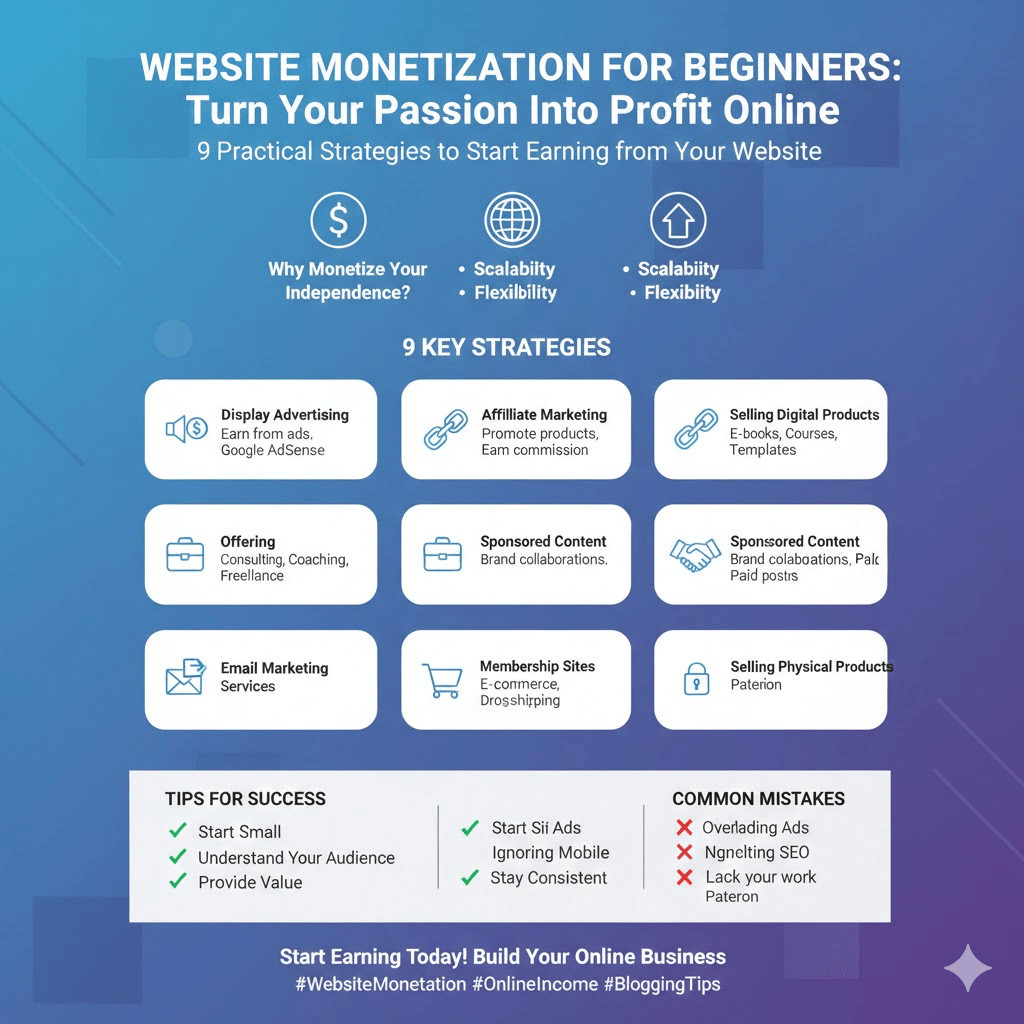
Website monetization can be approached in multiple ways. Below are the most accessible and effective strategies for beginners.
1. Display Advertising
Display advertising is one of the most common ways to monetize a website. It involves placing ads on your website, and you earn revenue when visitors view or click on these ads.
- Use Google AdSense: Google AdSense is beginner-friendly and automatically serves relevant ads based on your content and audience.
- Other Ad Networks: Consider alternatives like Media.net, AdThrive, or Ezoic as your traffic grows.
- Placement Matters: Position ads strategically without disrupting user experience. Sidebars, headers, and within content are popular spots.
Pros:
- Easy to set up
- Passive income potential
Cons:
- Requires substantial traffic for meaningful income
- Ad blockers may reduce revenue
2. Affiliate Marketing
Affiliate marketing allows you to earn a commission by promoting products or services offered by other companies. When visitors purchase through your affiliate links, you earn a percentage of the sale.
- Choose a Niche: Focus on products or services relevant to your website’s content and audience.
- Join Affiliate Programs: Examples include Amazon Associates, ShareASale, ClickBank, and Commission Junction.
- Create Quality Content: Use reviews, tutorials, and comparison articles to integrate affiliate links naturally.
Pros:
- Low start-up cost
- Potential for passive income
Cons:
- Income depends on traffic and conversion rates
- Requires trust and credibility with your audience
3. Selling Digital Products
Digital products can be highly profitable and easy to deliver. Examples include e-books, online courses, templates, stock photos, and software.
- Identify Your Expertise: What knowledge or skill can you package into a digital product?
- Create the Product: Focus on quality, usability, and solving a problem for your audience.
- Use Platforms for Sales: Tools like Gumroad, Shopify, or WooCommerce make it easy to sell products online.
Pros:
- High-profit margins
- Scalable income without inventory
Cons:
- Requires upfront work to create products
- Marketing is essential to generate sales
4. Offering Services
Many beginners can start monetizing a website by offering services such as consulting, coaching, freelance writing, graphic design, or web development.
- Highlight Your Skills: Use your website as a portfolio to showcase past work or expertise.
- Package Services: Offer clear service packages with pricing to simplify client decisions.
- Build Credibility: Include testimonials and case studies to attract clients.
Pros:
- Direct income from your skills
- Can start with low or no traffic
Cons:
- Income is tied to your time and availability
- Requires active client acquisition
5. Sponsored Content
Sponsored content involves collaborating with brands to create posts, videos, or reviews that promote their products. Brands pay for exposure to your website audience.
- Grow Your Audience: Brands typically look for websites with engaged traffic.
- Reach Out to Brands: Send proposals to companies relevant to your niche.
- Disclose Partnerships: Follow ethical guidelines and disclose sponsored content to maintain trust.
Pros:
- Higher revenue per post compared to ads
- Builds brand partnerships
Cons:
- Requires a loyal and engaged audience
- May require negotiation skills
6. Email Marketing and Newsletters
Email marketing allows you to build a direct relationship with your audience and promote products, services, or affiliate offers.
- Collect Emails: Use signup forms and lead magnets like free guides or templates.
- Choose an Email Marketing Tool: Platforms like Mailchimp, ConvertKit, or Sendinblue are beginner-friendly.
- Provide Value: Share tips, resources, and exclusive offers to maintain engagement.
Pros:
- Direct communication with your audience
- High ROI potential
Cons:
- Requires time to build a list
- Consistency is key for engagement
7. Membership Sites and Subscriptions
Offering premium content or exclusive access through memberships is a growing trend. Users pay a recurring fee to access specialized content, courses, or tools.
- Identify Valuable Content: Determine what users are willing to pay for, such as tutorials, research, or insider insights.
- Use Membership Plugins: WordPress plugins like MemberPress or Restrict Content Pro make setup easier.
- Market Your Offer: Highlight the benefits of joining and provide a clear value proposition.
Pros:
- Predictable recurring income
- Builds a loyal community
Cons:
- Requires regular content updates
- Needs marketing to attract members
8. Selling Physical Products
Although more complex than digital products, selling physical products through e-commerce integration can be a lucrative strategy.
- Choose Your Products: Select products related to your website niche.
- Set Up an Online Store: Use WooCommerce, Shopify, or BigCommerce to sell products.
- Manage Logistics: Consider dropshipping or third-party fulfillment to simplify shipping.
Pros:
- Tangible products can attract a broad audience
- Opportunity for brand building
Cons:
- Inventory and shipping management can be challenging
- Higher upfront costs
9. Donations and Crowdfunding
If your website provides valuable content or services, you can invite users to support your work voluntarily.
- Donation Buttons: Platforms like PayPal or Buy Me a Coffee allow easy donations.
- Crowdfunding Campaigns: Sites like Kickstarter or Patreon enable recurring or project-based support.
Pros:
- Low barrier to entry
- Builds community support
Cons:
- Unpredictable income
- Relies heavily on audience generosity
Choosing the Right Strategy
Not every strategy fits all websites. Consider the following when choosing your approach:
| Strategy | Ideal For | Key Considerations |
|---|---|---|
| Display Ads | Blogs, content websites | Needs high traffic to generate significant income |
| Affiliate Marketing | Product-focused blogs or reviews | Requires trust and targeted audience |
| Digital Products | Expertise-driven websites | Upfront creation effort needed |
| Services | Portfolio or freelance-focused websites | Directly tied to your skills and time |
| Sponsored Content | Sites with engaged audiences | Audience size and niche relevance matter |
| Email Marketing | Any site with traffic | Requires consistent content and engagement |
| Memberships | Niche-focused, high-value content | Needs ongoing content and marketing effort |
| Physical Products | E-commerce or niche product websites | Inventory and logistics management required |
| Donations/Crowdfunding | Value-driven or free content websites | Reliant on audience generosity |
Tips for Beginners
- Start Small: Focus on one or two strategies initially to avoid overwhelm.
- Understand Your Audience: Tailor monetization methods to your visitors’ interests and needs.
- Provide Value: Revenue comes from trust and engagement; content quality is key.
- Track Performance: Use analytics to monitor which strategies generate income.
- Stay Compliant: Follow regulations for advertising, affiliate marketing, and taxation.
Common Mistakes to Avoid
- Overloading Ads: Too many ads can drive visitors away.
- Ignoring Mobile Users: Ensure your website is mobile-friendly.
- Neglecting SEO: Organic traffic is crucial for monetization.
- Focusing Only on Revenue: Balancing user experience and income is critical.
- Lack of Consistency: Regular content and updates are necessary for growth.
FAQs About Website Monetization
1. How much can beginners realistically earn?
Earnings vary. Some beginners may earn $50–$200 per month initially, while consistent effort and traffic growth can scale earnings to $1,000–$5,000+ monthly.
2. How soon can I monetize my website?
Monetization can begin immediately for strategies like affiliate marketing or ads, but significant income typically requires months of content creation and audience growth.
3. Do I need a large audience to start monetizing?
Not always. Some methods, such as offering services or digital products, can generate income even with a small but targeted audience.
4. Can I combine multiple monetization strategies?
Yes, combining strategies, such as affiliate marketing, ads, and digital products, can diversify revenue streams and increase income potential.
5. Is website monetization passive income?
Some strategies, like digital products and ads, can become passive over time, but others, such as services or sponsored content, require active involvement.
Website monetization for beginners is achievable with the right approach, patience, and dedication. By understanding your audience, selecting suitable strategies, and delivering valuable content or services, you can generate income from your website while building a sustainable online presence.
Starting small, testing different methods, and gradually expanding your monetization efforts is the key to long-term success. With consistent effort and strategic planning, your website can evolve from a passion project into a reliable source of income.
Do you have any questions, suggestions, or contributions? If so, please feel free to use the comment box below to share your thoughts. We also encourage you to kindly share this information with others who might benefit from it. Since we can’t reach everyone at once, we truly appreciate your help in spreading the word. Thank you very much for your support and for sharing!
Read Also: The Health Benefits of Using Dan o’s Seasoning on your Cooking