
Starting an online business from scratch may feel overwhelming at first, especially if you have no prior experience. The good news is that the internet has leveled the playing field. Today, anyone with a good idea, basic digital skills, and dedication can create a successful online business from anywhere. You do not need a large budget, a technical background, or a big team to begin.
This guide explains how to start an online business step by step, using simple language and realistic expectations. Each section breaks down the process so you can understand what to do, why it matters, and how to move forward with confidence.
Read Also: Why Young People Should Return to Farming
Understanding What an Online Business Really Is
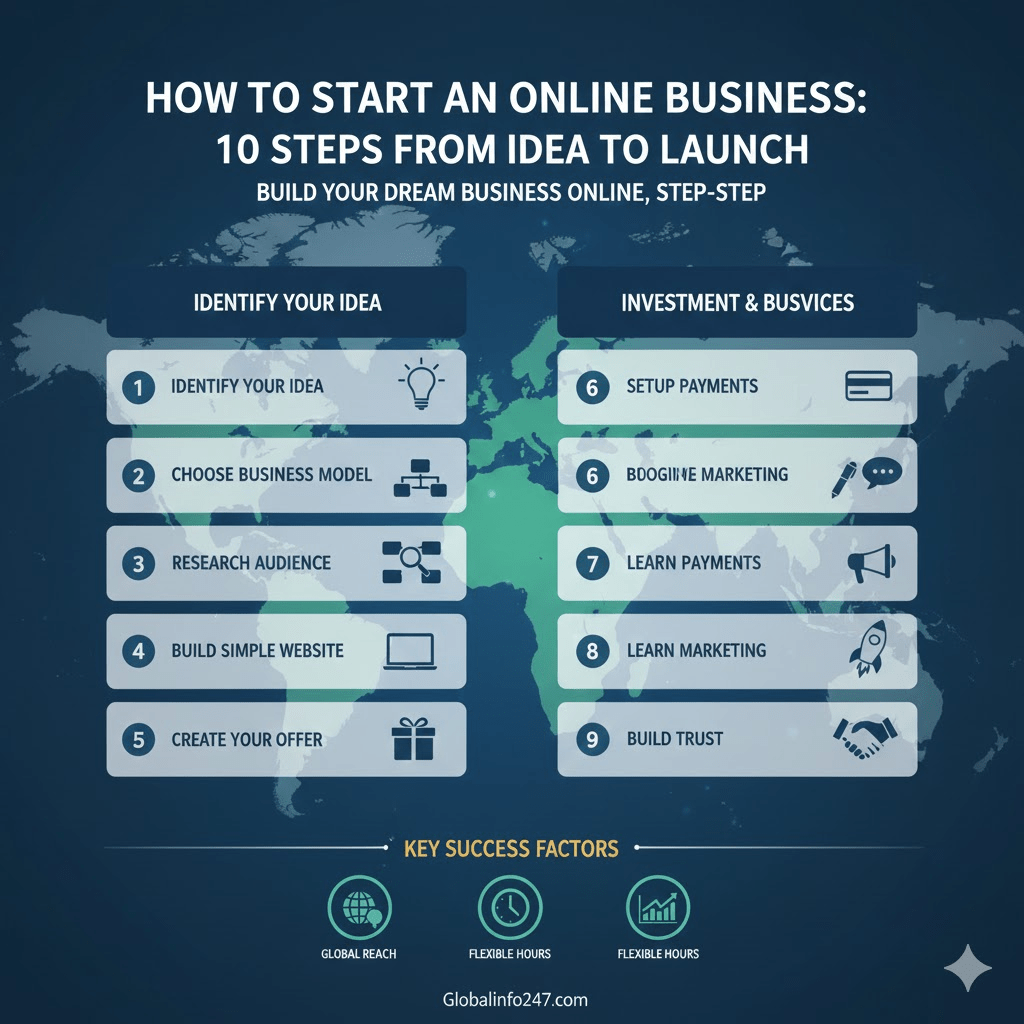
An online business is any venture that operates primarily on the internet. This can include selling products, offering services, sharing content, or building digital platforms that generate revenue.
Unlike traditional businesses, online businesses often have lower startup costs and fewer physical limitations. You can reach customers globally, automate many processes, and scale faster with the right systems in place.
At its core, an online business solves a problem or fulfills a need. When you focus on providing value, income becomes a natural result.
Step 1: Identify the Right Business Idea
Every successful online business starts with a clear idea. The best ideas usually sit at the intersection of three factors: demand, skills, and profitability.
You should ask yourself what problems people are actively trying to solve. This could involve learning new skills, saving time, improving health, or making money. Research helps validate whether people are willing to pay for a solution.
You do not need a revolutionary idea. Many successful businesses simply improve or specialize in something that already exists.
Step 2: Choose a Profitable Business Model
A business model defines how your business will make money. Choosing the right one early helps avoid confusion later.
Common online business models include:
- Selling physical products
- Offering digital products
- Providing services
- Subscription-based platforms
- Advertising and affiliate income
Each model has its advantages and challenges. Service-based businesses are often faster to start, while product-based businesses offer scalability. Select a model that aligns with your skills, budget, and long-term goals.
Step 3: Research Your Target Audience
Knowing your audience is critical. You need to understand who your customers are, what they want, and how they make buying decisions.
Research involves observing online communities, reading reviews, and analyzing competitor content. This helps you identify gaps and opportunities. When you understand your audience deeply, marketing becomes more natural and effective.
Step 4: Build a Simple Online Presence
You do not need a complex website to start. A simple and clear online presence is enough to begin attracting customers.
This may include a basic website, a landing page, or a professional social media profile. Your focus should be clarity, not perfection. Your online presence should explain what you offer, who it is for, and how people can take action.
Step 5: Create or Source Your Product or Service
Once your foundation is ready, it is time to build what you will sell. This could be a service package, a digital product, or a physical item.
Start small. Instead of creating a perfect product, aim for a functional version that solves a real problem. Feedback from early customers helps improve your offer. This approach reduces risk and speeds up learning.
Step 6: Set Up Payment and Delivery Systems
A business cannot function without smooth payment processing. Choose payment methods that are secure and trusted by your audience.
For services, delivery may involve calls, emails, or shared platforms. For products, ensure fulfillment is reliable and timely. Clear pricing and transparent policies build customer trust from the start.
Step 7: Learn Basic Online Marketing
Marketing is how people discover your business. You do not need to master everything at once.
Focus on one or two channels where your audience spends time. This could be search engines, social media, email, or video platforms. Consistency matters more than perfection. Over time, small efforts compound into visible growth.
Step 8: Launch and Test Your Business
Launching does not mean being perfect. It means making your offer available and inviting people to try it. Early stages are about learning. Track what works, what does not, and where customers get confused. Adjust based on real data rather than assumptions.
Step 9: Build Trust and Credibility
Trust is the foundation of any online business. Customers need to feel confident before spending money. You can build trust by sharing testimonials, being transparent, and communicating clearly. Delivering value consistently strengthens your reputation. A trustworthy brand grows faster and retains customers longer.
Step 10: Scale With Systems and Automation
Once your business gains traction, scaling becomes the next focus. Scaling means increasing revenue without increasing workload at the same rate. This can involve automation tools, outsourcing tasks, or expanding your product range. Scaling should be gradual and intentional to maintain quality.
Common Mistakes Beginners Should Avoid
- Many beginners struggle because they try to do too much too soon. Others quit too early due to unrealistic expectations.
- Avoid comparing your journey with others. Focus on steady progress and long-term learning.
- Building an online business is a process, not a race.
Steps to Start an Online Business
| Step | Purpose | Key Focus |
|---|---|---|
| Idea Selection | Identify opportunity | Demand and value |
| Business Model | Define income source | Sustainability |
| Audience Research | Understand customers | Clarity |
| Online Presence | Establish visibility | Simplicity |
| Product Creation | Solve a problem | Functionality |
| Payment Setup | Enable transactions | Trust |
| Marketing | Drive traffic | Consistency |
| Launch | Test assumptions | Learning |
| Trust Building | Retain customers | Reliability |
| Scaling | Grow efficiently | Automation |
Frequently Asked Questions (FAQs)
1. Do I need money to start an online business?
Some businesses require little to no money, especially service-based or digital businesses.
2. How long does it take to become profitable?
This varies. Some businesses earn within weeks, while others take months of consistent effort.
3. Can I start while working a full-time job?
Yes, many successful online businesses start as side projects.
4. Do I need technical skills?
Basic digital skills are enough. Many tools are beginner-friendly and easy to learn.
5. Is failure common in online business?
Failure is part of learning. Each attempt provides experience that improves future success.
Starting an online business from scratch is one of the most rewarding paths you can take. It teaches independence, creativity, and problem-solving.
With patience, consistency, and a focus on value, anyone can turn an idea into a sustainable online business. The key is to start, learn, and keep moving forward—one step at a time.
Do you have any questions, suggestions, or contributions? If so, please feel free to use the comment box below to share your thoughts. We also encourage you to kindly share this information with others who might benefit from it. Since we can’t reach everyone at once, we truly appreciate your help in spreading the word. Thank you very much for your support and for sharing!
Read Also: Kinsmith Finance Credit Score Requirements