
In today’s digital economy, relying on a single source of income for your website is risky. Algorithm changes, market fluctuations, or seasonal traffic shifts can easily disrupt your revenue. The key to building a sustainable and profitable website lies in monetizing it with multiple income streams. By diversifying your earnings, you stabilize your cash flow. This also creates growth opportunities that one revenue source cannot provide.
This article looks at how to make money from a website. It combines different strategies that feel natural to your audience. Whether you are a blogger, entrepreneur, or content creator, this guide will help you earn more from your website.
Understanding Multiple Income Streams
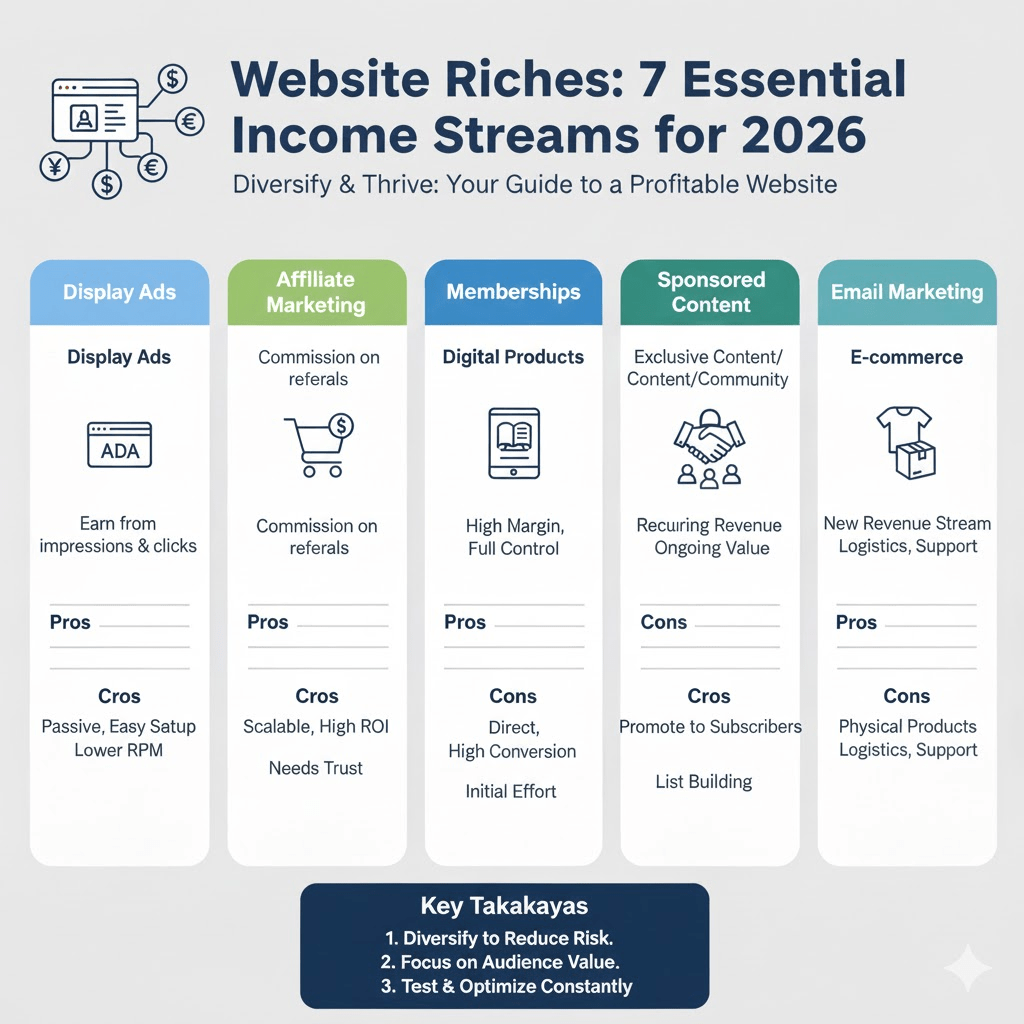
Multiple income streams refer to earning money through more than one method on the same website. Rather than depending solely on ads, affiliate links, or product sales, you integrate several monetization strategies simultaneously. This diversification reduces risk and allows one revenue source to support the others.
Consider your website like a business. Just as successful companies diversify their products or services, a website benefits from multiple streams of revenue. The best way is to match your money-making methods with what your audience needs. This way, they will feel helpful, not intrusive.
For example, a tech blog could combine affiliate product recommendations, premium tutorials, display advertising, and a subscription newsletter. Each source contributes to the total revenue, and if one slows down, the others maintain stability.
Preparing Your Website for Monetization
Before monetizing, your website must have a strong foundation. Successful monetization relies on trust, quality content, and consistent traffic. Here’s what to focus on:
1. Quality Content
Content is the cornerstone of any profitable website. Your articles, guides, and resources should address real problems and provide actionable solutions. Good content builds trust, encourages people to return, and increases the chances of sales for your products or services.
2. Audience Targeting
Traffic volume alone does not guarantee revenue. A website with 10,000 targeted visitors is often more profitable than one with 100,000 random visitors. Understanding your audience’s interests and needs ensures that monetization efforts resonate effectively.
3. Website Performance
A slow or poorly designed website can discourage visitors, reducing conversions and ad engagement. Optimizing for mobile devices, improving load times, and simplifying navigation can significantly enhance your monetization potential.
4. User Experience
Monetization should never compromise user experience. Ads, pop-ups, or product placements must feel natural. When visitors perceive value without disruption, they are more likely to engage with your revenue streams.
Read Also: Navigating the World of Republic Finance
What is Display Advertising?
Display advertising is often the starting point for website monetization. It involves showing ads on your site and earning revenue based on impressions or clicks.
How Display Ads Work
Ad networks, such as Google AdSense, Mediavine, or Ezoic, automatically serve relevant advertisements to your visitors. Revenue is determined by factors such as traffic quality, visitor demographics, and niche. While display ads alone may not generate massive income, they provide a baseline revenue stream with minimal effort.
Best Practices
- Avoid clutter: Too many ads reduce engagement and trust.
- Use targeted placements: Place ads where users naturally look without interrupting content flow.
- Monitor performance: Regularly review which ad formats and placements yield the best results.
Display advertising is passive but effective, especially for websites with consistent traffic.
Affiliate Marketing
Affiliate marketing allows you to earn commissions by promoting third-party products or services. You receive a percentage of sales generated through your referral links.
Effective Affiliate Strategies
- Educational content: Tutorials, reviews, and comparisons provide value while naturally introducing affiliate products.
- Honest recommendations: Building trust increases conversions. Only promote products that genuinely benefit your audience.
- Niche focus: Specializing in a specific niche improves relevance, boosting click-through and conversion rates.
Affiliate marketing scales well as your audience grows. Unlike display ads, which pay per impression, affiliate income rewards user engagement and purchasing behavior, making it highly profitable if executed thoughtfully.
Selling Digital Products
Digital products offer high margins and scalability. Examples include eBooks, courses, templates, guides, and software tools. Once created, digital products can be sold repeatedly with minimal additional cost.
Advantages of Digital Products
- Ownership: You control pricing, marketing, and distribution.
- High profitability: Production costs are low compared to physical goods.
- Recurring potential: Courses or software subscriptions can provide ongoing income.
To succeed, digital products must solve specific problems or provide unique insights. Proper marketing through your website and email campaigns maximizes reach and conversions.
Memberships and Subscriptions
Memberships create recurring revenue by offering exclusive content or features to paying users. This could include:
- Premium articles or tutorials
- Private forums or communities
- Access to specialized tools or downloads
Why Subscriptions Work
Recurring payments provide predictable income, allowing you to plan growth and reinvest in your website. Memberships work best when your website already offers valuable free content, as users are more willing to pay for enhanced resources.
Implementation Tips
- Offer multiple tiers to cater to different audience segments.
- Ensure ongoing value to maintain subscription renewals.
- Use tools like Patreon, MemberPress, or custom membership systems for smooth user experiences.
Sponsored Content and Brand Partnerships
Once your website gains credibility, companies may pay for sponsored posts or partnerships. This type of content involves writing articles or producing content that promotes a brand while maintaining authenticity for your audience.
Benefits of Sponsored Content
- High earning potential: Sponsorship deals often pay more than ad revenue or affiliate commissions.
- Brand alignment: Working with relevant companies enhances your website’s credibility.
- Flexible arrangements: Sponsorships can be one-off or ongoing.
The key is transparency. Always disclose sponsored content to maintain trust with your audience.
Email Marketing and Lead Generation
Building an email list is essential for long-term monetization. Emails allow direct communication with your audience, promoting products, courses, or affiliate offers more effectively than relying solely on website visits.
Effective Strategies
- Offer lead magnets such as free eBooks or checklists.
- Segment your audience to send personalized offers.
- Use automation tools to nurture subscribers with valuable content.
A well-maintained email list amplifies all other monetization strategies and often generates higher ROI.
E-commerce and Physical Products
If your niche supports it, selling physical products can complement digital offerings. E-commerce requires more effort for inventory, shipping, and customer service, but it can diversify revenue significantly.
Key Considerations
- Focus on niche products with strong relevance to your audience.
- Optimize product pages for conversions.
- Integrate smoothly with your website without disrupting user experience.
Even a small product line can contribute meaningfully to overall income when paired with digital products and services.
Combining Income Streams Strategically
The most successful websites combine multiple monetization methods in a strategic, user-focused way. Here are some principles:
- Align with audience needs: Monetization should feel helpful, not intrusive.
- Balance revenue types: Use a mix of passive (ads, affiliates) and active (products, subscriptions) income streams.
- Test and optimize: Regularly track performance and adjust strategies based on data.
- Avoid overloading: Too many monetization methods can overwhelm visitors and reduce engagement.
By thoughtfully layering income streams, your website can achieve sustainable, long-term profitability.
Common Website Income Streams
| Income Stream | Description | Pros | Cons |
|---|---|---|---|
| Display Advertising | Ad impressions or clicks | Passive, easy setup | Lower revenue if traffic is small |
| Affiliate Marketing | Commission on referred sales | High scalability, performance-based | Requires trust and quality traffic |
| Digital Products | eBooks, courses, templates, software | High margins, full control | Initial creation effort required |
| Memberships / Subscriptions | Exclusive content or community access | Recurring income, audience loyalty | Must maintain ongoing value |
| Sponsored Content / Partnerships | Paid promotions for brands | High earning potential | Needs audience credibility |
| Email Marketing | Promote products via subscriber list | Direct, high ROI | Requires list building effort |
| Physical Products / E-commerce | Tangible goods sold to audience | Expands revenue streams | More logistics and support |
Frequently Asked Questions (FAQ)
Q1: How soon can a website start earning multiple streams of income?
It depends on traffic, content quality, and niche. Typically, websites with consistent content and a growing audience can begin monetization within six months to a year.
Q2: Do I need a large audience to monetize effectively?
Not necessarily. Targeted and engaged audiences often convert better than large, general traffic. Smaller niche websites can earn significant revenue through well-placed affiliate offers, digital products, or subscriptions.
Q3: Can multiple income streams overwhelm my visitors?
Only if monetization is poorly implemented. When aligned with content and user needs, multiple streams can feel natural and even enhance user experience.
Q4: Which income stream is the most profitable?
It varies. Digital products, memberships, and affiliate marketing often provide higher margins than display ads. However, a combination of all streams usually produces the most stable revenue.
Q5: How do I track and optimize multiple income streams?
Use analytics tools like Google Analytics, affiliate dashboards, and revenue reports from ad networks. Testing placements, pricing, and offers helps identify high-performing strategies.
Monetizing a website through multiple income streams is both a practical and strategic approach to building a sustainable online business. By combining display advertising, affiliate marketing, digital products, memberships, sponsored content, email marketing, and even e-commerce, you can create a resilient revenue ecosystem.
The key is to maintain quality, user focus, and diversification. A thoughtful, audience-centered approach ensures that monetization adds value rather than detracting from the user experience. Over time, these strategies compound, creating a website that not only earns money but grows in authority, trust, and influence.
By implementing these strategies consistently, your website can transition from a hobby or side project into a profitable, scalable online business that continues to generate income from multiple sources.
Do you have any questions, suggestions, or contributions? If so, please feel free to use the comment box below to share your thoughts. We also encourage you to kindly share this information with others who might benefit from it. Since we can’t reach everyone at once, we truly appreciate your help in spreading the word. Thank you very much for your support and for sharing!
Read Also: How to Cure Ulcer with Unripe Paw-Paw (Papaya): Proven Steps