
A professional email is one of the most powerful tools in modern business communication. Whether you are contacting clients, applying for a job, responding to customers, or communicating with colleagues, the quality of your email can shape how others perceive you and your organization. A well-written business email builds credibility, strengthens relationships, and helps achieve clear communication, while a poorly written one can damage trust, cause confusion, or even cost you opportunities.
This comprehensive guide explains how to create professional emails for business use, from setting up a proper email address to writing polished messages that sound confident, clear, and respectful. By following the principles outlined here, you will be able to communicate more effectively and present yourself as professional and reliable in any business situation.
Why Professional Emails Matter in Business
Email remains the backbone of business communication. Despite the rise of messaging apps and collaboration platforms, email continues to be the primary method for formal communication, documentation, and external correspondence. Clients expect professionalism, clarity, and courtesy in business emails, and your writing reflects your work ethic and attention to detail.
Professional emails help establish authority, reduce misunderstandings, and ensure that messages are taken seriously. They also provide written records of agreements, instructions, and decisions, making them essential for accountability and reference. In many cases, your email is the first impression someone has of you or your company, so it needs to reflect competence and professionalism from the very first line.
Read Also: Do Monkeys and Chimpanzees Menstruate? The Surprising Truth!
Setting Up a Professional Business Email Address
Before writing a professional email, it is important to start with a professional email address. Using a casual or personal email address can weaken your credibility, especially in formal business settings.
A professional business email should ideally use your company domain. For example, an address like [email protected] looks far more credible than [email protected]. A domain-based email reinforces brand identity and builds trust with clients and partners.
If you do not yet have a custom domain, choose a clean and simple email address using your real name. Avoid unnecessary numbers, nicknames, or informal words. The goal is clarity, simplicity, and professionalism.
Understanding the Structure of a Professional Email
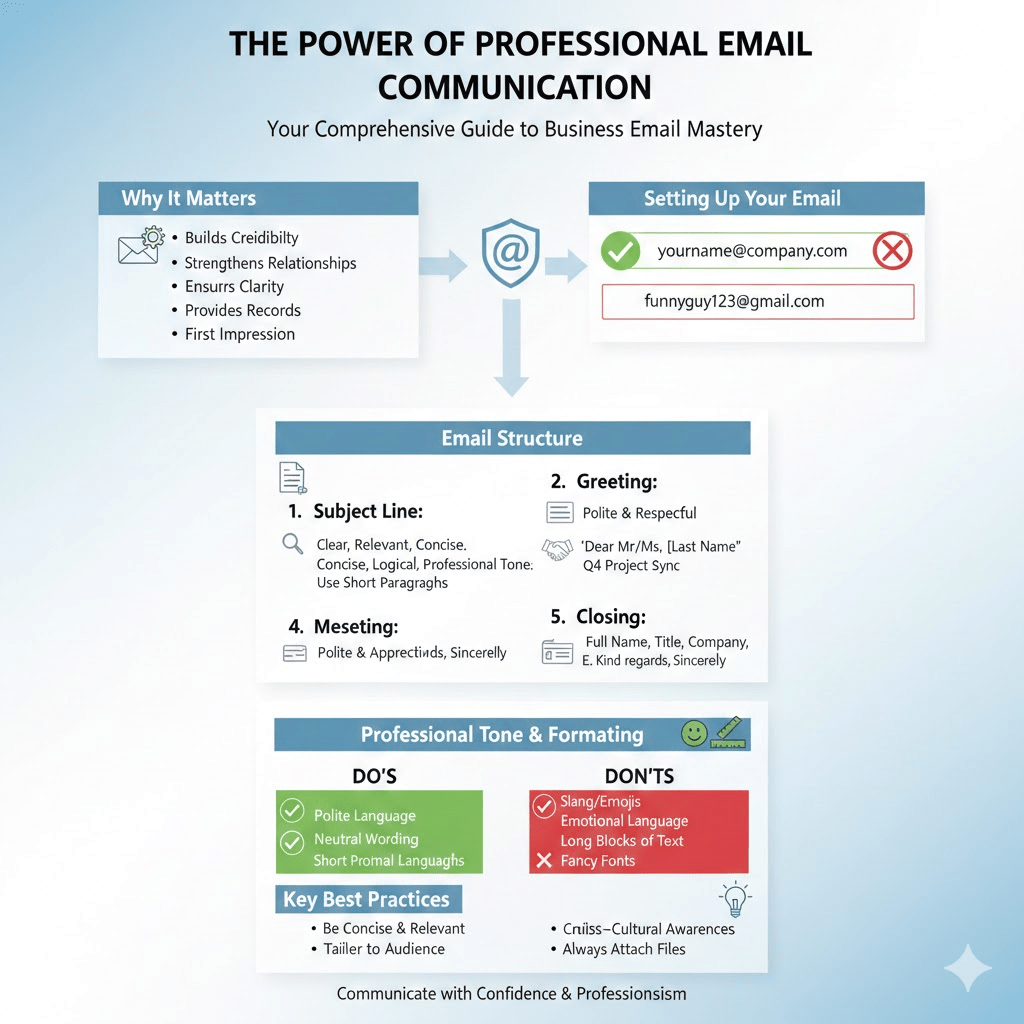
A professional email follows a clear structure that makes it easy to read and understand. This structure helps the recipient quickly grasp your message and respond appropriately.
A typical business email includes:
- A clear subject line
- A professional greeting
- A concise and well-organized message body
- A polite closing
- A professional signature
Each of these elements plays a critical role in creating a polished and effective email.
Writing an Effective Subject Line
The subject line determines whether your email is opened or ignored. It should be clear, relevant, and concise. A good subject line summarizes the purpose of the email in a few words.
Instead of vague subjects like “Hello” or “Important,” use specific descriptions such as “Meeting Request for Project Discussion” or “Invoice for January Services.” Clear subject lines show respect for the recipient’s time and improve response rates.
Professional subject lines avoid excessive capitalization, emojis, or informal language. They remain neutral, direct, and focused on the purpose of the message.
Using the Right Greeting
The greeting sets the tone for your email. In professional communication, it is important to use polite and respectful salutations.
Common professional greetings include:
- Dear Mr. Johnson
- Dear Ms. Ahmed
- Hello David
- Good morning Sarah
When writing formal emails, especially to new contacts, using “Dear” followed by the recipient’s title and last name is considered respectful. For ongoing professional relationships, first names may be acceptable depending on company culture.
Avoid casual greetings like “Hey,” “Hiya,” or slang-based openings, as they may appear unprofessional in business contexts.
Writing Clear and Professional Email Content
The body of your email should communicate your message clearly, logically, and respectfully. Start by stating your purpose early so the recipient immediately understands why you are writing. Long introductions are unnecessary and can dilute the message.
Use short paragraphs and clear sentences to improve readability. Avoid large blocks of text, as they can overwhelm readers and reduce comprehension. Keep your tone professional, polite, and neutral, even when addressing problems or concerns.
Be direct but courteous. Professional emails should be firm when necessary, but never rude or aggressive. The goal is to maintain positive relationships while communicating effectively.
Maintaining a Professional Tone
Tone is one of the most important elements of business emails. Even when discussing difficult topics, your tone should remain calm, respectful, and solution-oriented.
Professional tone involves:
- Polite language
- Neutral wording
- Clear explanations
- Respectful phrasing
Avoid emotional expressions, sarcasm, or overly casual language. Even short emails should reflect professionalism. Reading your email aloud before sending can help you detect tone issues and awkward phrasing.
Structuring Your Message for Clarity
A well-structured email improves understanding and saves time for both the sender and recipient. Each email should focus on a single main topic whenever possible. If multiple points must be discussed, separate them clearly using paragraphs or short lists.
Logical flow is important. Begin with context, explain the main message, and end with a clear call to action. This structure guides the reader smoothly through your message and helps them know exactly what is expected.
Ending Emails Politely and Professionally
Your closing should reflect politeness and appreciation. Professional closings help maintain a positive tone and reinforce respectful communication.
Common professional closings include:
- Kind regards
- Best regards
- Sincerely
- Thank you
- Warm regards
Choose a closing that fits the level of formality of your message. After the closing, include your full name, job title, company name, and contact details. A professional email signature adds credibility and makes it easy for recipients to respond or follow up.
Creating a Professional Email Signature
An email signature is more than just your name. It serves as your digital business card and should contain essential information without unnecessary clutter.
A professional email signature typically includes:
- Full name
- Job title
- Company name
- Phone number
- Website or company address
Avoid decorative fonts, bright colors, or excessive images. Clean and simple designs look more professional and are compatible across different email clients.
Formatting Tips for Professional Emails
Formatting plays a crucial role in readability. Professional emails should be visually clean and easy to scan.
Use:
- Short paragraphs
- Simple fonts
- Standard text size
- Minimal colors
Avoid:
- Excessive bold or italics
- Decorative fonts
- Bright colors
- Large blocks of text
Well-formatted emails appear organized, professional, and respectful of the reader’s time.
Common Business Email Types and How to Write Them
Professional email writing varies depending on the purpose. Understanding how to structure different types of emails helps you communicate effectively in various business situations.
1. Inquiry Emails
Inquiry emails request information, clarification, or action. These should be polite, direct, and clear about what you are requesting.
2. Follow-Up Emails
Follow-up emails remind recipients of previous messages. They should remain polite and respectful, acknowledging the recipient’s time and workload.
3. Complaint or Issue Emails
These emails require a calm and professional tone. Focus on facts, describe the problem clearly, and propose solutions without emotional language.
4. Thank-You Emails
Thank-you emails strengthen professional relationships. Express gratitude clearly and genuinely, keeping the message concise and positive.
Professional Email Writing Best Practices
Consistency and attention to detail separate average emails from professional ones. Always proofread your emails before sending to avoid spelling, grammar, or formatting mistakes. Errors can reduce credibility and create confusion.
Use proper punctuation, correct grammar, and clear sentence structure. Even minor mistakes can leave a negative impression, especially in formal business environments.
Keep emails concise and relevant. Busy professionals appreciate messages that get straight to the point without unnecessary detail.
Avoiding Common Email Mistakes
Many people unintentionally weaken their emails through small but significant mistakes. These include vague subject lines, unclear messages, overly long paragraphs, and inappropriate tone.
Another common mistake is sending emails without reviewing attachments or links. Always double-check that files are attached correctly and links work as intended. These small habits demonstrate professionalism and reliability.
Professional Email Do’s and Don’ts
| Do | Don’t |
|---|---|
| Use clear subject lines | Use vague or empty subjects |
| Keep a polite tone | Use slang or casual expressions |
| Proofread before sending | Send emails with errors |
| Use professional greetings | Start with informal greetings |
| Structure content logically | Write long unbroken paragraphs |
Writing Emails for Different Business Situations
Professional email communication adapts to different contexts. A formal proposal email differs in tone and structure from a casual internal update. Learning to adjust your style depending on the audience is a valuable skill.
When communicating with clients, professionalism and clarity are crucial. For internal communication, tone may be slightly more relaxed but should still remain respectful and clear. For executives or senior management, concise and direct messaging is often preferred.
Understanding your audience helps tailor your message effectively.
Email Etiquette in Global Business Communication
When communicating across cultures, email etiquette becomes even more important. Different regions have varying expectations regarding formality, greetings, and communication styles.
In international communication, it is best to maintain a neutral, polite, and respectful tone. Avoid slang, idioms, and humor that may not translate well. Clear and simple language ensures your message is understood regardless of cultural differences.
Frequently Asked Questions (FAQ)
1. What makes an email professional?
A professional email is clear, respectful, well-structured, and free of grammatical errors. It uses proper greetings, maintains a formal or semi-formal tone, and includes a professional signature.
2. How long should a business email be?
Business emails should be concise while providing enough detail to convey the message clearly. Most professional emails range between 100 and 250 words, depending on complexity.
3. Should I always use formal language?
Formality depends on the relationship and context. For new contacts, clients, and official communication, formal language is best. For internal teams or familiar colleagues, a slightly relaxed tone may be acceptable.
4. Is it necessary to use a business email domain?
While not mandatory, using a custom domain email significantly improves credibility and brand image. It shows professionalism and builds trust.
5. How quickly should I respond to business emails?
Ideally, respond within 24 hours. Prompt replies show reliability, professionalism, and respect for the sender’s time.
Learning how to create professional emails for business use is a fundamental skill in today’s digital workplace. From the structure and tone to formatting and etiquette, every element contributes to how your message is received. Well-written emails build trust, strengthen professional relationships, and help you communicate effectively in any business environment.
By applying the principles explained in this guide, you can confidently write emails that reflect professionalism, clarity, and respect. Over time, consistent practice will refine your style, making professional communication a natural and powerful part of your business success.